The Trinitarian Misconception of Echad.
None of my postings on this blog are meant to do anything, but to evoke thought and discussion for Trinitarians and Oneness adherents. I do not ever use the blog to make a thesis statement set in stone of any particular doctrinal issue. I use it as a sounding board for myself and for others who read it. Lately I been discussing the Trinitarian's usage or misuse of the Hebrew word Echad. The word echad is the word for one in the Hebrew scriptures used 967 times. Trinitarians whom I have encountered on debate groups on Facebook and Youtube like to argue rigidly, that one only means a unity of one and not a an absolute one. This narrow view would absolutely contradict scriptural teaching for the word and especially in Malachi 2:10. Malachi 2:10 uses the word Echad 2 times once for the word Father and another for the word God. The Trinitarian's are being inconsistent in my opinion and I welcome anyone in the comments to tell me I am wrong? But if Echad is a oneness of unity only for God in Malachi 2:10 then to be consistent it would have to be a unity of One in relation to the Father in the passage also. Who are the other Father's in the passage? We know already that they believe there are other person of God to maintain their view that one is a unity of God persons, but what about the one for the word Father?
I contend that yes there are gods many, but Only one absolute true God. There are also father's many, but only one absolute true Father our God. That is the reason for the usage of the compound unity and it has nothing to do with God being a unity of God persons. I do not mean for this to be exhaustive whatsoever because I also do not like to telegraph all of my arguments when discussing these issues with Trinitarian's but would love to hear in the comments of other ideas.
Wednesday, August 29, 2018

Saturday, August 11, 2018
Modalism
Modalism what is it? We should ask ourselves that question often, especially in light of the fact being, that Trinitarian's are more Modalist than any Modalist.
I know there are Trinitarian readers (possibly) scratching their heads think the writer has lost all of his respective marbles. Maybe not, stay with me for just a moment?
Trinitarian's have a weird eternal role playing game of Father and Son throughout all eternity, where one person of God plays the role of the Father, and yet the other eternal person plays the role of the son.
There is no real "progeny where a child has any parent in the sense of the word." The definition of progeny says the following:"The organism or organisms resulting from sexual or asexual reproduction. b. A child or children of a parent "(thefreedictionary.com/progeny). The Father and Son of the Trinity are in name only and are on equal footing as divine persons so that the roles could be switched up and nobody be the wiser.
The next time trinitarian's want argue over "Modalism," I think it is high time we give them the sobering fact/facts of the matter and show them that they are more Modalist than we Oneness ever thought about being.
Saturday, February 24, 2018
We Are Still Waiting For The Debate.
https://streamable.com/nl7fy
*Well,
I see that Edward Dalcour still views me as a thorn in his side. In
his typically pompous fashion Dalcour charges me with selecting sources
"bit and pieces" and then cobbling them together to defend the biblical
Oneness doctrine.
*Of
course, this has been pointed out to him ad nauseum, but, this
accusation coming from someone (Dalcour) who repeatedly appeals to Dr.
Joseph Thayer - who was a unitarian that denied the coming of Jesus,
taught baptism for the dead and openly rejected that Jesus was God! *One of many of his quotes that I could marshal shall suffice:
*Worse, Dalcour is completely wrong in his assertions that Christians have not concluded that the Messianic prophecy of Isaiah 9.6 plainly identifies Jesus as the "eternal Father." Trinitarians might reject the natural sense of this inspired passage, but biblical Christians allow the text to speak for itself and accept it as it's written.
*Dalcour just never seems to learn and puts his foot in his mouth at virtually every turn. Of course, all of this could be cleared up in formal 3-hour polemic platform. In the meantime I am currently working on yet another exegetical rejoinder to Dalcour's painful dodges in his recent article on Acts 2.38. I am hoping to post it on my blog in the next few weeks (https://apostolicacademics.com/).
https://apostolicacademics.com/
Friday, February 16, 2018
The reason I put up this video is because you will notice Dr. White waved his hand and dismissed my argument.He did not even give it a second thought.. He will turn right around and ask his own absurd questions and demand that we answer. One absurd question they frequently ask: "was Jesus talking to himself?" "Was it the Father or the son who hung on the cross?" Etc. It goes on and on.
Friday, January 26, 2018
My New Absurd Argument.
Here is how trinity divides God: The church is the bride of
Jesus, who is the bride-groom. The church is not the bride of the Trinity. You have one person of God married to the church The Son of God and the other
two persons of God eternal bachelors.
I know the argument points out absurdity, but I would like to hear in the comments from both Oneness adherents and Trinitarian why or why not the argument does not work or should not be used?
Thursday, January 11, 2018
James White Proves What Exactly?
Dr. James White was reviewing the Steven Ritchie versus Edward Dalcour debate that took place on January 6, 2018. While on the Dividing Line program January 11, 2018 and was attempting to explain the Oneness position as two persons for Oneness. You can view the one minute clip that I captured below.
Did James White expose his own position as polytheistic in explaining the Oneness position? You can be the judge?
The relevant portion of the video is where he attempts to explain the Oneness position and begins by saying : the Father and Son "are having a conversation internally between the human Son and the divine Father who are one person, but.. Sort, not really, they are sort of two persons because they are talking to each other." I believe Dr. White was attempting to display an absurdity in the Oneness position when it makes his own trinity doctrine more absurd and is very revealing of what he actually believes if one is being honest. If there is one only God would he not be having an internal discussion? There most certainly could not be another God to have a discussion with. This is where the multiple God persons come about fr the Trinitarian position. This proves the Oneness position and actually highlights the truth of the incarnation. What makes an incarnation? One God and one man make the incarnation.
I have submitted two versions in case some are more interested in what is said the second video actually just highlights Dr. Whites attempts at explaining the Oneness view the first is a little longer.
Dr. James White was reviewing the Steven Ritchie versus Edward Dalcour debate that took place on January 6, 2018. While on the Dividing Line program January 11, 2018 and was attempting to explain the Oneness position as two persons for Oneness. You can view the one minute clip that I captured below.
Did James White expose his own position as polytheistic in explaining the Oneness position? You can be the judge?
The relevant portion of the video is where he attempts to explain the Oneness position and begins by saying : the Father and Son "are having a conversation internally between the human Son and the divine Father who are one person, but.. Sort, not really, they are sort of two persons because they are talking to each other." I believe Dr. White was attempting to display an absurdity in the Oneness position when it makes his own trinity doctrine more absurd and is very revealing of what he actually believes if one is being honest. If there is one only God would he not be having an internal discussion? There most certainly could not be another God to have a discussion with. This is where the multiple God persons come about fr the Trinitarian position. This proves the Oneness position and actually highlights the truth of the incarnation. What makes an incarnation? One God and one man make the incarnation.
I have submitted two versions in case some are more interested in what is said the second video actually just highlights Dr. Whites attempts at explaining the Oneness view the first is a little longer.
Tuesday, August 01, 2017
Steven Anderson Says Jesus is the Father.
This is short clip of Steven Anderson preaching that Jesus is the Father from John 14:8 in 2008. This is a supplement to the other videos of Elliot Ray's own videos where pastor Anderson excoriates four men who were removed from the church for teaching Oneness instead of the Trinity.
This is short clip of Steven Anderson preaching that Jesus is the Father from John 14:8 in 2008. This is a supplement to the other videos of Elliot Ray's own videos where pastor Anderson excoriates four men who were removed from the church for teaching Oneness instead of the Trinity.
Monday, July 24, 2017
https://youtu.be/lymVuNU-ny4
Friday, July 21, 2017
An Answer To Reformed Cultist Edward Dalcour on Biblical Baptism versus Dalcour's Trinitarian Baptism.
Biblical Baptism applied by the Apostles.
Not once do we find a triune announcement called over any person being water baptized used by any Apostle in the pages of the scriptures. For this very reason this writer will attempt to show what is wrong with Edward Dalcour's assertions and misapplication that every single Trinitarian who writes on the subject gets wrong. Dalcour's words will be in blue. My answers will be in orange.
"The anti-Trinitarian Oneness Pentecostals, especially the
United Pentecostal Church International
(UPCI), assert that the so-called “apostolic” baptismal formula was “in the name
of Jesus” only, recorded in Acts and not in the Trinitarian formula expressed in
Matthew 28:19. This position is based on the following assertions (not
exegetical ones) made by Oneness advocates:"
1) Unitarian Assumption.
In order to circumvent and deny the clear Trinitarian teaching of Matthew 28:19
and Trinitarian implications found in the entirety of the NT content, Oneness
believers start with their unitarian/unipersonal premise (viz. God existing as
one person) and thus interpret the Bible through those lenses (as Muslims and
JWs do).
Edward Dalcour by writing " Unitarian assumption" is showing his own bias which he is trying to highlight as absurd, he actually shows his own bias with only one single obscure passage versus the six clear passages and let's us know he has a "Trinitarian assumption." Well, we all know that we all have some bias, but in studying God's word it should the concern of anyone studying it to be thus saith the Lord.. Our bias should go out the window in light of the truth of scripture. Jesus said sanctify them(The Disciples later to become the Apostles) through thy truth, thy word is truth.(John 17:17) It is the word that informs us concerning truth and has the final say. It is not councils or creeds or men whom some think were the so called "church" in history, but rather the word of God, the completed cannon of the New Testament.
Response: First, there is no place in the OT or NT where God is denoted as “one person.” Instead, Scripture clearly defines God as “one Being.” Monotheism is the teaching that God is one Being, not one person. Thus, passages that speak of one God (e.g., Deut. 6:4; Isa. 43:10; 1 Tim. 2:5), Oneness advocates radically re-define monotheism to mean unipersonalism (one person).
There is no place in scripture denoted where "God is three persons" either! The bible says God is one! One what? Here we go again with the age old debate of what constitutes a being and a person? Well, if Dalcour wants to argue or debate that premise he and all Trinitarian's would lose that debate! There is no word in the New Testament Greek for the word person in the way in which he uses it for God's Spirit. The word either means the mask on the face of an actor or substance there are many words in our English that means substance, one of which means goo. Neither of those words in the English helps Edward Dalcour in a Greek meaning or an English meaning.
The word "Person" for God forced upon the scriptures in the way that it is used by Trinitarian's would contradict everything they teach about the word "person" especially when it comes to the word nature.(Read 2 Peter 1:4) or being.
One would have to use the dictionary to find the meaning for the word person which says the following: Merriam Webster.
Webster says one of three modes of being. Are you really going to use that Mr. Dalcour? since the word person does not exist in the way he forces it upon the pages of scripture for his dogma? Person and being are indistinguishable. The Trinity has three persons and three beings according to the dictionary meaning of the word person or three modes of being, neither of which helps in this discussion.
Second, in the OT there are many plural words describing the one true Yahweh (such as Gen. 1:26; 3:22; 11:7; Isa. 6:8; 54:5 [Heb. “Makers, Husbands”]; Eccl. 12:1 [Heb. “Creators”]; etc.). Further, there are places in the OT, where Yahweh interacts with another Yahweh. Note for example, Genesis 19:24: “Then the LORD [Yahweh] rained on Sodom and Gomorrah brimstone and fire from the LORD [Yahweh] out of heaven” (cf. also Dan. 7:9-14; Hosea 1:7).Even more, the NT clearly presents three distinct divine persons, the Father, and the Son, and the Holy Spirit who share the nature of the one God (cf. Matt. 28:19; Luke 10:21-22; John 1:1; Gal. 1:3; 2 Cor. 13:14; Heb. 1:3, 6, 8-10; 1 Pet. 1:2; 1 John 1:3; Jude 1:20-21; etc.). These passages are only consistent with biblical monotheism in the context of Trinitarianism.
As usual we see that Edward Dalcour is not actually exegeting the subject to which he claims expertise at all, he is simply taking a very obscure (hard to explain) passage and uses it for his trinity dogma and nothing about baptism at all.
Admittedly if one did not take the time to try and understand the text for which Dalcour forces his argument where supposedly one YHWH on earth rained down fire and brimstone from another YHWH out of heaven, it would be easy to be fooled by his doctrine. The rest of the passages are easily explained, but this one needs a little more time to do so.
I believe this was to help the Jewish people to understand the coming incarnation and was the temporary manifestation of God as a man on earth and at the same time still remain in heaven as an omnipresent Spirit. It is no different than what modern Oneness teach and believe today about the incarnation or as God manifested or revealed in flesh. The Jews in their strict monotheism could never accept the dogma of the trinity and rightly so!
God did not give his glory to another, he did it himself as a man and this was a glimpse into it and Jesus himself said Abraham rejoiced to see my day. Literally! Only one day into a short glimpse when he bargained (not with another person of god) but God himself in flesh and yet still in heaven at the same time. This was only as a temporary manifestation not as something Trinitarians say existed as three persons of God.
2) In the “Name,” not “Names.”
Oneness advocates argue that because the “name” in the passage is singular, the
“name” then is Jesus who is the single unipersonal deity behind the masks or
roles of the “Father,” “Son,” and “Holy Spirit.”
The mask or role of the Father? The Father is who God is in relation to his covenant people. There is no "role or manifestation. God was revealed or manifested in the man Jesus who is the image or the seen of the unseen invisible God.(John 1:18,5:37,Col. 1:15) Father, Son, and Holy Spirit are not masks or roles anymore than I am a mask or role
.
Response:
Grammatically, if the term onoma
(“name”) had been written in the plural (onomata,
i.e., “in the names”), it would
have clearly indicated three separate beings—which is not Trinitarianism,
but Tritheism (three separate Gods).
In point of fact, never in church history has any church father interpreted
Matthew 28:19 in this way. That the singularity of a word necessarily
implies absolute solitude is refuted by such passages as
Genesis 11:4. Here we read of the
people of Babel saying: “Come let us build for ourselves a city, and a tower
whose top will reach into heaven, and let us make for ourselves a
name….”
The “name” appears in the singular in both the Hebrew (shem)
and in the LXX (onoma) being applied
to a whole multitude of people—not to one person. Hence, in Matthew 28:19, Jesus
commands the apostles to baptize their converts “in the
name [not ‘names’] of the Father,
and the Son, and the Holy Ghost”—the triune God.
Nobody here is arguing for names or onomata. One wonders why Dalcour is throwing up such a smokescreen diversion from the actual point that Oneness try and make? Dalcour actually contradicts himself, there were hundreds of thousands of human beings with thousands upon thousands of names. They were making for themselves a name in the sense of reputation. Onoma/name, as much as Dalcour wants to hide the fact, does not only mean reputation or authority or any other word that can be attached to it, but just means a person's name.Of course with Jesus as a historic figure as to his life and ministry would be a person to hold all of those meanings to his actual name, reputation, power authority, with the actual name Jesus. .When you say the name Jesus, everyone knows who is being spoken of as to his reputation and authority all by saying the one name.Thousands gather together because of the name Jesus.
3) “Name”= Power/Authority. In the OT, the term “name” in the Hebrew mindset did not merely serve as a designation of a person (unless the context says otherwise), but rather referred to the essence of the person himself.[1] Thus, the phrase, eis to onoma (“in the name”) was predominantly used to signify “authority, power, on behalf of.” The NT import extends back to the OT in such places as the David and Goliath narrative: “You come to me with a sword, a spear and a javelin, but I come to you in the name of the LORD [Yahweh] of hosts, the God of the armies of Israel, whom you have taunted” (1 Sam. 17:45; cf. Acts 4:7). Thus, Christian baptism symbolizes the unification of the new convert into (cf. eis at 1 Cor. 10:2) the “name,” that is, in the power/authority of the one and only true triune God, Yahweh—the Father, and the Son, and the Holy Spirit.
This is the very thing Oneness people concerning the name Jesus believe. Scriptures teaches that it takes the actual spoken literal name Jesus for the power and authority to remit sin and belong to the Lord's body. It is above every single name that is named not only in this world, but that also to come.(Eph. 1:21) I would hope Dalcour would not mistake named in the passage as anything lesson than the name being said or mentioned.
Oneness adherents believe from scripture no less, that without the literal spoken name Jesus being said over a person being baptized; which gives to us many things in types and shadows. The Jews themselves would understand such that a male Jewish child was named and circumcised on the eighth day after their birth.(Luke 1:59) The child was not considered even born until this was done. Baptism in Jesus name is a type of the Old circumcision of the Jews.(Col. 2:11-14) It is a type and we are named at out new birth
Another type for Jesus name baptism is as a marriage. The woman takes the name of her one husband. The church is the body and bride of Jesus not the trinity! It seems they( 2 persons of the Trinity) are doomed to eternal bachelorhood. In Oneness we understand that it is our God himself in the Lord Jesus Christ is the husband and we take his name in marriage.(2 Cor.11:2, Eph. 5:22-23, Rev. 21:9)
The Trinity church has no authority because it has no name as a mere institution and has no real husband in a trinity.
English Standard Version
From whom every family in heaven and on earth is named(Eph. 3:15).
Yes we as Oneness know it says I bow my knees unto the Father of the Lord Jesus Christ. Jesus the man would have nothing without the only true God giving those things to him as a genuine man and not another person of God in the incarnation.( Matth. 28:18,John 3:34,1st Tim. 2:5)
4) Distinct Persons. There are also grammatical reasons refuting the Oneness position of Matthew 28:19. First, the text does not read, “In the name of the Father, Son, and Holy Spirit,” which would give some grammatical (but not contextual) merit to the Oneness position, since the reading contains only article (“the”) preceding “Father.” Nor is the preposition eis (“in,” or “into”) repeated as, “In the name of the Father and in the Son and in the Holy Spirit,” which can be construed as three separate Beings. Rather, as Matthew wrote: “In the name of the Father, and the Son, and the Holy Spirit” (eis to onoma tou patros kai tou hiou kai tou hagiou).
Edward Dalcour is so dishonest in this supposed argument and sets up a strawman and then proceeds to knock it down. Why would Oneness even make the argument for three separate beings from scripture? That would not help either Oneness or Trinity positions.This is simply more of the same misdirection that Dalcour is known for to dishonestly make a false case.
One thing that Dalcour never mentions is that their is only one scripture and only one in all of the bible never to be used, ever again, nor spoken of as a triune name in baptism. Peter and the Apostles Understanding was opened after the resurrection that they might understand the scripture.(Luke 24:45) Never ever is the three titles ever mentioned again by any Apostle in relation to baptism. No example not even one honorable mention.
It is because they knew what the one authoritative name was! All other names of the past used for God were below this name Jesus in authority and power! That is why God was known by so many. It all leads up to the crescendo in the name Jesus/Iseous.(Read Acts 2:38, 4:12, 8:16,10:48 *he commanded them to be Baptized in Jesus name.Acts 19:1-6, 22;16, 1st Cor. 6:11,15:29 *One is still dead in their sin before baptism at mere belief on Jesus.)
Second, as established by grammarians and biblical scholars (e.g.,
Sharp,[2]
Warfield, Robertson, Greenlee, Wallace et al), Matthew 28:19 clearly denotes
three distinct persons obliterating the “non-distinction of persons” assertion
made by Oneness advocates. For the
text reads: “In the name of
the [tou]
Father, and [kai]
of
the [tou]
Son, and [kai]
of
the [tou]
Holy Spirit.”[3]
Note that in the Greek, the definite article
tou (“the”) precedes each singular personal noun (“Father,” “Son,” “Holy
Spirit”) and each noun is connected by the conjunction,
kai (“and”).
2 Corinthians 13:14:
“The grace of the [tou] Lord Jesus Christ and [kai]
the love of the [tou] God and [kai] the fellowship
of the [tou] Holy Spirit with all of you.”
1 John 1:3:
“indeed our fellowship is with the [tou] Father and [kai]
with the [tou] Son of Him Jesus Christ.”
Revelation 5:13:
“the [tō] One sitting upon the throne and [kai] to
the [tō] Lamb, the blessing and the honor and the glory and the
dominion into the ages of the ages.”
See also 1
Thessalonians 3:11; 2 Thessalonians 2:16; and 1 John 2:22-23, which also fall
under this construction clearly differentiating Jesus and the Father as two
distinct persons. Alongside the aforementioned, there are many passages where
all three persons of the Trinity are in apposition (cf.
Matt. 3:16-17; Luke 10:21-22; Gal. 4:6; Eph. 2:18; 1 Thess. 1:3-6; 2 Thess.
2:13; Titus 3:5-7; 1 Peter 1:2-3; Jude 1:20-21;
etc.).
Which Formula Matthew 28:19 or Acts?
All of these can be lumped together for this point. If the other titles of God were added to the list of those three titles would we have more persons if I made my own list Example: In the name of the Lord, and of the consuming Fire,and of the Rose of Sharon? I highly doubt it. These three titles of God are in relation to his redemptive work toward mankind. They are not three persons of God. God first loved his creation and provided redemption through a kinsmen redeemer our brother the Lord Jesus Christ.(1st Tim. 2:5) there is one mediator between (two parties) God and mankind, THE MAN Christ Jesus. Why? because he is the mediator by the means of death. God was both parties. Man and God, Father and Son, Spirit and Flesh, Visible and invisible, corruptible and incorruptible. A walking contradiction if you will He to whom both died and can never die.
This construction clearly distinguishes the three persons. There are passages in the NT that also fall under Sharp’s rule #6 distinguishing the persons in the Trinity. Note the literal rendering of these passages below:
This construction of titles does no such thing as distinguishes three persons of God any more than the other multiple titles of God that can be given distinguishes multiple persons of God. God's Spirit in completeness is sometimes described more times in the bible as seven Spirits of God(Isa. 11:2, Rev. 5:6, 13:8) That completeness was given to Jesus in the incarnation and is exactly what Isa. 11:2 speaks of. If Sharps rule proves persons then all the other titles used the same way prove more persons and the Seven Spirits of God prove more than three persons.
Because the few recorded baptisms in the Acts narrative were "in the name of
Jesus" (or a variation), and not in the Trinitarian formula, Oneness advocates
argue that the "correct" apostolic "verbal" formula was "in the name of Jesus,"
and not in the Trinitarian formula. However, even assuming that “in the name of Jesus” was a “verbal” formula utilized in
Acts, there is a plausible explanation removing a “Matthew vs. Acts” conflict.
Consider that when Jesus gives His disciples the so-called Great Commission in
Matthew 28:19, He instructs them to go out into
panta ta ethnē (“all the nations”).
Many nations were pagan and were involved in worshiping creatures, things in
creation, and not the true Creator (cf. Rom. 1:18ff.). Hence, the full
revelation of the triune God was at issue.
Edward Dalcour if the Trinity were at issue, then the Apostles should expounded upon such a great issue, but no such thing was ever expounded upon and I would be helping you with your side of the issue because it was expounded upon. This is your bad theory that we do not see in scripture what soever. As was pointed out earlier Jesus opened their understanding that they might understand the scriptures, but no such issue was ever taught once more no more mention of a Trinitarain baptism whatsoever.
On the other hand, in Acts, the new converts who were baptized were Jews (cf.
2:5; 22:16), God-fearing Gentiles (cf. 10:1-2, 22, 48) and disciples of John the
Baptist (cf. 19:1-5). The new converts that were baptized as recorded in Acts
had a prior conception (although incomplete and inaccurate) of God. Thus, in
Acts, the emphasis of the baptism was on Jesus Christ (cf. Acts 10:43), and
through Him, “there is salvation in no one else; for there is no other name
under heaven that has been given among men by which we must be saved” (Acts
4:12).
Lastly, consider for a moment what the recorded
baptisms in Acts actually say. There are at least three “Jesus’ name” formulas
stated in Acts: “on [epi
+ dative] the name of Jesus Christ” (2:38);
“into [eis + accusative] the name of the Lord Jesus” (8:16; 19:5); and “in
[en + dative] the name of Jesus
Christ” (10:48). If in fact these baptisms recorded in Acts were performed by
means of a “verbal” baptismal formula (which will be argued against shortly) and
thus mandated to the church, as is supposed, then according to the record, the
early Christians did not utilize any “exact” verbal formula by which they
baptized.
That is right! Give that man a prize! That is what Oneness teaches the only thing that matters is that Jesus name be pronounced at the baptism to remit ones sins as the only authority under heaven and earth backed by the Lord. One is not told what to preach word for word anymore than one is told the exact fluff to say given a short teaching moment at a baptismal for a repentant sinner. Who is not saved at belief.(Read Acts 19;2 and 1st Cor. 15:29) Thank you for making this point Dalcour! We make the same point.
Although both views (the Matthean Trinitarian formula and the so-called “Jesus’
name” verbal formula in Acts) are both theologically possible, the Oneness inept
hermeneutic of Matthew 28:19, along with their hyper-dogmatic strict “name"
formula, which is required for salvation, sharply opposes the entire theology of
both the OT and NT.
Mere opinion from Dalcour who is reaching for something here but has absolutely nothing in the way of a valid argument. There is not one single passage for a triune formula for salvation.
Manuscripts and the Early Church: The Trinitarian Formula
Of
all the extant Greek manuscripts that contain the ending of Matthew,
not one omits the Trinitarian formula
and no variant reading exists. Church history is utterly a throne in the flesh
to Oneness theology. Even more, today
there exists massive amounts of patristic writings (esp. the apostolic church
fathers)
and early documents that quote the full Trinitarian clause of Matthew 28:19 in a
Trinitarian context.
Within these writings, not one of these early fathers taught or even implied
that a “Jesus’ name” baptismal formula
was the “correct” formula and thus essential to one’s salvation, nor did any
assert a Oneness interpretation of Matthew 28:19.
For example, the early church instructional manual, the Didache
(“teaching,” formally called The Teaching of the Twelve Apostles,
c. A.D. 90-120), speaking
of water baptism, provides clear instructions in a Trinitarian context alluding
to Matthew 28:19:
This is more opinion. The scriptures teach the word is truth.(John 17:17) Until Trinitarains add the Diadache to the closed cannon or any of the supposed men that Dalcour has also submitted as truth tellers to the scriptures those men have no place in any scriptural discussion concerning truth. When one builds a house they have a st of plans called the blueprints to build the house. When one wants instructions for an understanding of the New Testament church and how it operates, you look to the scriptures not to men in history. The point is made very often by the men who prop up these fallacious kinds of arguments that well they were closer in history to the Apostles and that may very well be , but we are not told to look to anyone in history close to the Apostles for the instructions of the church. There were men who sat directly under Paul who did not teach truth and Paul told us about those men when he wrote: And their word will eat as doth a canker: of whom is Hymenaeus and Philetus;who concerning the truth have erred.
Being closer to the Apostles time and sitting under the Apostles directly does not automatically make one a truth teller concerning the word of God. If they are wrong and we follow them then we are wrong. One cannot be wrong following the bible.
Many more examples can be cited clearly demonstrating the fact that the
baptismal formulaic norm of the early church was decidedly Trinitarian, not
modalistic/Oneness. No Christian writings from the first several centuries
insisted on a “Jesus’ name” formula or specifically discussed what baptismal
formula should be used. The early church embraced the concept of the Trinity, as
patristic authority J. D. N. Kelly points out:
But the Apostles in the scriptures did! Which should be to those concerned with truth everything.If you are looking for other than truth you will look somewhere else. history should not be trusted for truth but rather the truth the word of God.
Oneness-unitarianism is unequivocally non-Christian rejecting the biblical
revelation of Jesus Christ. Oneness theology rejects the deity and
unipersonality of the Son, it rejects the unipersonality of both the Father and
the Holy Spirit, and it rejects the personal distinctions between Jesus and the
Father and the Holy Spirit. These rejections constitute a rejection of the very
nature of God Himself (cf. Hosea 6:6; John 4:24; 17:3; 1 John 2:22-23).
The same could be said of Trinitarainism and it looks exactly like paganism.(Tritheism) there is no biblical revelation of Jesus Christ as a third person of a Trinity, this is simply a very biased opinion of a large number of people which is meaningless as far as truth should be concerned. The masses do not always follow truth. It absolutely does not reject the clear distinctions between the Spirit and the man, those are very real distinctions what we reject is trinity dogma of three persons of God. One could ask what makes three gods? Well three persons does it not? Those who hold to that doctrine when asked that question will try to make every excuse they can to not answer it knowing it will incriminate them. The debate rages on and on and there should be more debates not just words written.
Biblical Baptism applied by the Apostles.
Not once do we find a triune announcement called over any person being water baptized used by any Apostle in the pages of the scriptures. For this very reason this writer will attempt to show what is wrong with Edward Dalcour's assertions and misapplication that every single Trinitarian who writes on the subject gets wrong. Dalcour's words will be in blue. My answers will be in orange.
Trinitarian Baptismal Formula
Edward Dalcour by writing " Unitarian assumption" is showing his own bias which he is trying to highlight as absurd, he actually shows his own bias with only one single obscure passage versus the six clear passages and let's us know he has a "Trinitarian assumption." Well, we all know that we all have some bias, but in studying God's word it should the concern of anyone studying it to be thus saith the Lord.. Our bias should go out the window in light of the truth of scripture. Jesus said sanctify them(The Disciples later to become the Apostles) through thy truth, thy word is truth.(John 17:17) It is the word that informs us concerning truth and has the final say. It is not councils or creeds or men whom some think were the so called "church" in history, but rather the word of God, the completed cannon of the New Testament.
Response: First, there is no place in the OT or NT where God is denoted as “one person.” Instead, Scripture clearly defines God as “one Being.” Monotheism is the teaching that God is one Being, not one person. Thus, passages that speak of one God (e.g., Deut. 6:4; Isa. 43:10; 1 Tim. 2:5), Oneness advocates radically re-define monotheism to mean unipersonalism (one person).
There is no place in scripture denoted where "God is three persons" either! The bible says God is one! One what? Here we go again with the age old debate of what constitutes a being and a person? Well, if Dalcour wants to argue or debate that premise he and all Trinitarian's would lose that debate! There is no word in the New Testament Greek for the word person in the way in which he uses it for God's Spirit. The word either means the mask on the face of an actor or substance there are many words in our English that means substance, one of which means goo. Neither of those words in the English helps Edward Dalcour in a Greek meaning or an English meaning.
The word "Person" for God forced upon the scriptures in the way that it is used by Trinitarian's would contradict everything they teach about the word "person" especially when it comes to the word nature.(Read 2 Peter 1:4) or being.
One would have to use the dictionary to find the meaning for the word person which says the following: Merriam Webster.
Webster says one of three modes of being. Are you really going to use that Mr. Dalcour? since the word person does not exist in the way he forces it upon the pages of scripture for his dogma? Person and being are indistinguishable. The Trinity has three persons and three beings according to the dictionary meaning of the word person or three modes of being, neither of which helps in this discussion.
Second, in the OT there are many plural words describing the one true Yahweh (such as Gen. 1:26; 3:22; 11:7; Isa. 6:8; 54:5 [Heb. “Makers, Husbands”]; Eccl. 12:1 [Heb. “Creators”]; etc.). Further, there are places in the OT, where Yahweh interacts with another Yahweh. Note for example, Genesis 19:24: “Then the LORD [Yahweh] rained on Sodom and Gomorrah brimstone and fire from the LORD [Yahweh] out of heaven” (cf. also Dan. 7:9-14; Hosea 1:7).Even more, the NT clearly presents three distinct divine persons, the Father, and the Son, and the Holy Spirit who share the nature of the one God (cf. Matt. 28:19; Luke 10:21-22; John 1:1; Gal. 1:3; 2 Cor. 13:14; Heb. 1:3, 6, 8-10; 1 Pet. 1:2; 1 John 1:3; Jude 1:20-21; etc.). These passages are only consistent with biblical monotheism in the context of Trinitarianism.
As usual we see that Edward Dalcour is not actually exegeting the subject to which he claims expertise at all, he is simply taking a very obscure (hard to explain) passage and uses it for his trinity dogma and nothing about baptism at all.
Admittedly if one did not take the time to try and understand the text for which Dalcour forces his argument where supposedly one YHWH on earth rained down fire and brimstone from another YHWH out of heaven, it would be easy to be fooled by his doctrine. The rest of the passages are easily explained, but this one needs a little more time to do so.
I believe this was to help the Jewish people to understand the coming incarnation and was the temporary manifestation of God as a man on earth and at the same time still remain in heaven as an omnipresent Spirit. It is no different than what modern Oneness teach and believe today about the incarnation or as God manifested or revealed in flesh. The Jews in their strict monotheism could never accept the dogma of the trinity and rightly so!
God did not give his glory to another, he did it himself as a man and this was a glimpse into it and Jesus himself said Abraham rejoiced to see my day. Literally! Only one day into a short glimpse when he bargained (not with another person of god) but God himself in flesh and yet still in heaven at the same time. This was only as a temporary manifestation not as something Trinitarians say existed as three persons of God.
The mask or role of the Father? The Father is who God is in relation to his covenant people. There is no "role or manifestation. God was revealed or manifested in the man Jesus who is the image or the seen of the unseen invisible God.(John 1:18,5:37,Col. 1:15) Father, Son, and Holy Spirit are not masks or roles anymore than I am a mask or role
.
Nobody here is arguing for names or onomata. One wonders why Dalcour is throwing up such a smokescreen diversion from the actual point that Oneness try and make? Dalcour actually contradicts himself, there were hundreds of thousands of human beings with thousands upon thousands of names. They were making for themselves a name in the sense of reputation. Onoma/name, as much as Dalcour wants to hide the fact, does not only mean reputation or authority or any other word that can be attached to it, but just means a person's name.Of course with Jesus as a historic figure as to his life and ministry would be a person to hold all of those meanings to his actual name, reputation, power authority, with the actual name Jesus. .When you say the name Jesus, everyone knows who is being spoken of as to his reputation and authority all by saying the one name.Thousands gather together because of the name Jesus.
3) “Name”= Power/Authority. In the OT, the term “name” in the Hebrew mindset did not merely serve as a designation of a person (unless the context says otherwise), but rather referred to the essence of the person himself.[1] Thus, the phrase, eis to onoma (“in the name”) was predominantly used to signify “authority, power, on behalf of.” The NT import extends back to the OT in such places as the David and Goliath narrative: “You come to me with a sword, a spear and a javelin, but I come to you in the name of the LORD [Yahweh] of hosts, the God of the armies of Israel, whom you have taunted” (1 Sam. 17:45; cf. Acts 4:7). Thus, Christian baptism symbolizes the unification of the new convert into (cf. eis at 1 Cor. 10:2) the “name,” that is, in the power/authority of the one and only true triune God, Yahweh—the Father, and the Son, and the Holy Spirit.
Oneness adherents believe from scripture no less, that without the literal spoken name Jesus being said over a person being baptized; which gives to us many things in types and shadows. The Jews themselves would understand such that a male Jewish child was named and circumcised on the eighth day after their birth.(Luke 1:59) The child was not considered even born until this was done. Baptism in Jesus name is a type of the Old circumcision of the Jews.(Col. 2:11-14) It is a type and we are named at out new birth
Another type for Jesus name baptism is as a marriage. The woman takes the name of her one husband. The church is the body and bride of Jesus not the trinity! It seems they( 2 persons of the Trinity) are doomed to eternal bachelorhood. In Oneness we understand that it is our God himself in the Lord Jesus Christ is the husband and we take his name in marriage.(2 Cor.11:2, Eph. 5:22-23, Rev. 21:9)
The Trinity church has no authority because it has no name as a mere institution and has no real husband in a trinity.
English Standard Version
From whom every family in heaven and on earth is named(Eph. 3:15).
Yes we as Oneness know it says I bow my knees unto the Father of the Lord Jesus Christ. Jesus the man would have nothing without the only true God giving those things to him as a genuine man and not another person of God in the incarnation.( Matth. 28:18,John 3:34,1st Tim. 2:5)
4) Distinct Persons. There are also grammatical reasons refuting the Oneness position of Matthew 28:19. First, the text does not read, “In the name of the Father, Son, and Holy Spirit,” which would give some grammatical (but not contextual) merit to the Oneness position, since the reading contains only article (“the”) preceding “Father.” Nor is the preposition eis (“in,” or “into”) repeated as, “In the name of the Father and in the Son and in the Holy Spirit,” which can be construed as three separate Beings. Rather, as Matthew wrote: “In the name of the Father, and the Son, and the Holy Spirit” (eis to onoma tou patros kai tou hiou kai tou hagiou).
Edward Dalcour is so dishonest in this supposed argument and sets up a strawman and then proceeds to knock it down. Why would Oneness even make the argument for three separate beings from scripture? That would not help either Oneness or Trinity positions.This is simply more of the same misdirection that Dalcour is known for to dishonestly make a false case.
One thing that Dalcour never mentions is that their is only one scripture and only one in all of the bible never to be used, ever again, nor spoken of as a triune name in baptism. Peter and the Apostles Understanding was opened after the resurrection that they might understand the scripture.(Luke 24:45) Never ever is the three titles ever mentioned again by any Apostle in relation to baptism. No example not even one honorable mention.
It is because they knew what the one authoritative name was! All other names of the past used for God were below this name Jesus in authority and power! That is why God was known by so many. It all leads up to the crescendo in the name Jesus/Iseous.(Read Acts 2:38, 4:12, 8:16,10:48 *he commanded them to be Baptized in Jesus name.Acts 19:1-6, 22;16, 1st Cor. 6:11,15:29 *One is still dead in their sin before baptism at mere belief on Jesus.)
This construction clearly distinguishes the three persons. There are passages in the NT that also fall under Sharp’s rule #6 distinguishing the persons in the Trinity. Note the literal rendering of these passages below:
Edward Dalcour if the Trinity were at issue, then the Apostles should expounded upon such a great issue, but no such thing was ever expounded upon and I would be helping you with your side of the issue because it was expounded upon. This is your bad theory that we do not see in scripture what soever. As was pointed out earlier Jesus opened their understanding that they might understand the scriptures, but no such issue was ever taught once more no more mention of a Trinitarain baptism whatsoever.
That is right! Give that man a prize! That is what Oneness teaches the only thing that matters is that Jesus name be pronounced at the baptism to remit ones sins as the only authority under heaven and earth backed by the Lord. One is not told what to preach word for word anymore than one is told the exact fluff to say given a short teaching moment at a baptismal for a repentant sinner. Who is not saved at belief.(Read Acts 19;2 and 1st Cor. 15:29) Thank you for making this point Dalcour! We make the same point.
Manuscripts and the Early Church: The Trinitarian Formula
This is more opinion. The scriptures teach the word is truth.(John 17:17) Until Trinitarains add the Diadache to the closed cannon or any of the supposed men that Dalcour has also submitted as truth tellers to the scriptures those men have no place in any scriptural discussion concerning truth. When one builds a house they have a st of plans called the blueprints to build the house. When one wants instructions for an understanding of the New Testament church and how it operates, you look to the scriptures not to men in history. The point is made very often by the men who prop up these fallacious kinds of arguments that well they were closer in history to the Apostles and that may very well be , but we are not told to look to anyone in history close to the Apostles for the instructions of the church. There were men who sat directly under Paul who did not teach truth and Paul told us about those men when he wrote: And their word will eat as doth a canker: of whom is Hymenaeus and Philetus;who concerning the truth have erred.
Being closer to the Apostles time and sitting under the Apostles directly does not automatically make one a truth teller concerning the word of God. If they are wrong and we follow them then we are wrong. One cannot be wrong following the bible.
The same could be said of Trinitarainism and it looks exactly like paganism.(Tritheism) there is no biblical revelation of Jesus Christ as a third person of a Trinity, this is simply a very biased opinion of a large number of people which is meaningless as far as truth should be concerned. The masses do not always follow truth. It absolutely does not reject the clear distinctions between the Spirit and the man, those are very real distinctions what we reject is trinity dogma of three persons of God. One could ask what makes three gods? Well three persons does it not? Those who hold to that doctrine when asked that question will try to make every excuse they can to not answer it knowing it will incriminate them. The debate rages on and on and there should be more debates not just words written.
Wednesday, July 19, 2017
Roger Perkins Answers a recent attack from Edward Dalcour .
Links to Roger Perkins blog. Enjoy.
https://apostolicacademics.com/2017/07/16/exegetical-surrejoinder-%cf%80%cf%81%e1%bd%b8%cf%82-edward-dalcour-i/
https://apostolicacademics.com/2017/07/18/exegetical-surrejoinder-%cf%80%cf%81%e1%bd%b8%cf%82-edward-dalcour-ii/
https://apostolicacademics.com/2017/07/19/exegetical-surrejoinder-%cf%80%cf%81%e1%bd%b8%cf%82-edward-dalcour-iii/
Monday, May 15, 2017
Youtube Questions.
This question comes from a youtube video on Facebook and I have actually heard it more than once in different and various iterations. This titled:"Questions for Oneness Pentecostals." Here are the four questions;Original Questions;1. God the father put on a physical body and "THE SON" is ONLY the flesh of The Father
2. God the Father manifested IN The Son in the same way he manifested IN the burning bush, cloud by day, or the fire by night.
3. God The Father manifested AS the son (part of him changed from spirit to flesh)
4. God The Father added a human nature to his divine nature in what is usually referred to as the hypostatic union?
Number 4 would be the closest understanding, but still none of them are really what we believe.
Jesus was a genuine man(1st Tim. 2:5)
5 For there is one God, and one mediator between God and men, the man Christ Jesus;
Jesus divinity was the only true God the Father(John 17:3) and incarnated him from the womb.(John 3:34, Matthew 1:21) Jesus said I and my Father are one.(John 10:30) even using the plural pronoun we does no harm to the Oneness of God because it is of one genuine man and one genuine God. The incarnation is not of a God person pretending to be a man like Trinitarian's teach. The Incarnation is One God incarnating the one man given who was given the Spirit of the Father without measure (John 3:34).
God was In Christ reconciling the world unto himself.( Not themselves 2nd Cor. 5:19).The true incarnation is not what Trinitarian's teach. It is Trinity doctrine.
Jesus did not pre-exist as the word/Logos and change from one thing into another.
If Jesus is God then the word is with Jesus as God!
Jesus is the God to whom the word is with.
The incarnation makes Jesus God in flesh; to whom the word is with.
We read a prophecy of the coming Jesus in judgment: The word/Logos is the spoken creative power of God to heal, judge, and create. God cannot be separated from that power.
but with righteousness shall he(Jesus) judge the poor, and reprove with equity for the meek of the earth: and he shall smite the earth with the rod his mouth(The word). and with the breath of his lips shall he slay the wicked.( Isaiah 11:4 KJV)
And out of his(Jesus) mouth(The word) proceedeth a sharp sword, that with it he should smite the nations: and he shall rule them with a rod of iron: and he treadeth the winepress of the fierceness of the wrath of God, the Almighty.(Revelation 19:15 American Standard Version)
And then the lawless one will be revealed, whom the Lord Jesus will overthrow with the breath of his mouth(The word) and destroy by the splendor of his coming.(ii Thessalonians 2:8 NIV)
At the breath of God(The word) they are destroyed; at the blast of his anger they perish(Job 4:9 NIV)
The rest of them were killed with the sword that came out of the mouth(The word) of the rider on the horse, (Jesus)and all the birds gorged themselves on their flesh. (Revelation 19:21 NIV)
By the word/Logos of the LORD were the heavens made and all the host of them by the breath of his mouth.(Psalm 33:6 Grk Septuagint))
here is the link to the original video:Oneness question.
Wednesday, April 12, 2017
Clayton Killion (Sounds like a good Irish name.) Wrote an interesting article on Elohim. I will put a link here Lectionary These Are The Gods back to his blog and the original article. https://lectionary.blog/
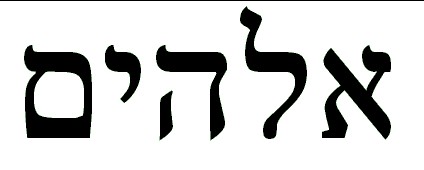
And the Philistines were afraid, for they said, God is come into the camp. And they said…Woe unto us! who shall deliver us out of the hands of these mighty Gods? these are the Gods that smote the Egyptians with all the plagues in the wilderness (1 Samuel 4:7-8).The casual reader of these verses will probably be confused as to why the word “Gods” is capitalized. I know I was! Anyone who studies the Bible knows that monotheism is taught time and again in the scriptures. After all, there is “one God and Father of all” (Ephesians 4:6); “there is but one God, the Father” (1 Corinthians 8:6). It doesn’t make sense to refer to Jehovah as “Gods”; Jehovah himself said “Hear, O Israel: the LORD our God is one LORD” (Deuteronomy 6:4). So why is the word “Gods” capitalized in this passage?
The answer lies with the Philistines. You see, the Philistines were trying to refer to the God “that smote the Egyptians with all the plagues”. We know that this God was the LORD Jehovah: “Thus saith the LORD…I will smite” (Exodus 7:17). But the Philistines were confused about Jehovah’s nature. For some reason they saw him as multiple beings, or persons. “Gods” is capitalized because the Philistines were referring to the LORD; and it is plural (as “Gods” instead of “God”) because they saw the LORD as more than one being (as “them” instead of “him”).
I believe I know why the Philistines were confused. Unfortunately the same thing that gave the Philistines trouble is confusing the modern church world. It is a simple misunderstanding of one word (and a few scriptures); but the effects of this error are multiple and massive doctrinal issues.
The central element of confusion is the word Elohim (אֶלהִים), the Hebrew word for “God”. Denominations that teach trinitarianism (the doctrine that the Godhead is made of three persons) or binitarianism (the doctrine that the Godhead is made of two persons) usually use the word Elohim (אֶלהִים) to support their doctrine. “Elohim is a plural word” they will tell us “and therefore God must have a plural nature”. Technically, Elohim (אֶלהִים) is the plural form of the Hebrew word El, which also means “God”. But, plural forms in the Hebrew language behave differently than in English; as a result, people holding to a pluralist view of the Godhead are confused by the nature of the word Elohim (אֶלהִים). The grammatical issues surrounding this Hebrew word have been described quite adequately by Rabbi Tovia Singer in a Q&A article he wrote for Outreach Judaism:
The word Elohim possesses a plural intensive syntax and is singular in meaning. In Hebrew, the suffix ים (im), mainly indicates a masculine plural. However with Elohim the construction is grammatically singular, (i.e. it governs a singular verb or adjective) when referring to the God of Israel, but grammatically plural elohim (i.e. taking a plural verb or adjective) when used of pagan divinities (Psalms 96:5; 97:7).For readers who may not be familiar with some of these grammatical terms, let me explain what Rabbi Singer is saying. When Elohim (אֶלהִים) refers to Jehovah, it has a plural form but a singular meaning. It has a plural form ONLY to intensify the meaning, not to state any sort of multiplicity in nature. It refers to only one being. When this word refers to pagan gods it has a plural form and a plural meaning. It refers to multiple beings. And lest anyone think that Rabbi Singer is twisting the facts because of his strict Jewish monotheism, we have abundant proof to bear out what he is saying.
Firstly, the word Elohim (אֶלהִים), when referring to Jehovah, takes a singular verb (1 Samuel 4:7-8 is an exception I will explain in just a bit). A perfect example of this phenomenon (which occurs nearly 2350 times in the scriptures) is Genesis 1:1 “In the beginning God [Elohim (אֶלהִים)] created [bara’ (בָּרָ֣א)] the heaven and the earth.” The word for God is a plural form, yet the verb “created” is singular. The verse is saying something on the order of “In the beginning Elohim created—he singularly/alone created—the heaven and the earth”. This concept harmonizes perfectly with Isaiah 44:24, “Thus saith the LORD…I am the LORD that maketh all things, that stretcheth forth the heavens alone; that spreadeth abroad the earth by myself” (emphasis added). If God were comprised of multiple beings then we would expect these verses to say something like “In the beginning…they created” and “we spread abroad the earth by ourselves”. But these verses, and countless others, speak of God/Elohim (אֶלהִים) as ONLY one person.
Secondly, the word Elohim (אֶלהִים) on occasion refers to people. For example, in Exodus 7:1 “the LORD said unto Moses, See, I have made thee a god [elohim (אֶלהִים)] to Pharaoh”. This reference is especially significant to people who say that the Godhead is composed of multiple people. Here we see the word applied to Moses. Is Moses multiple people? Of course not! The Septuagint translates the word singularly here as θεος (theos). The idea that Moses is comprised of multiple people is preposterous; and so is the idea of a multi-personal God.
Lastly, the word Elohim (אֶלהִים) can refer to pagan false gods. This is the word that the psalmist used when he said that “all the gods [elohim (אֶלהִים)] of the nations are idols”. When this word refers to Jehovah it takes singular verbs, nouns, and adjectives. When it refers to pagan gods it takes plural verbs, nouns, and adjectives. Notice how the word “idols” is plural?
Knowing what we know, let’s have a look back at what the Philistines said in 1 Samuel 4:7-8: “And the Philistines were afraid, for they said God [Elohim (אֶלהִים)] is come into the camp. And they said…Woe unto us! who shall deliver us out of the hands of these mighty Gods [Elohim (אֶלהִים)]? these are the Gods [Elohim (אֶלהִים)] that smote the Egyptians with all the plagues in the wilderness.” Now we see the confusion. To the Philistines, the word Elohim looked plural; so they naturally assumed that the nation of Israel worshiped multiple gods that were somehow united as one god. That is why the Philistines used the word Elohim as singular and plural: “Elohim is come into the camp…these are the Elohim”.
Modern trinitarians and binitarians are making the same mistake as the Philistines. They see the word Elohim and assume it is plural, though simple study of the facts demonstrates overwhelmingly otherwise. Unwittingly they adopt the king of polytheism that the Philistines were assuming about the nation of Israel. Isn’t it interesting that a pluralistic interpretation of God/Elohim (אֶלהִים) comes from a pagan nation that was always the enemy of God and his people? God identifies the source of any pluralistic, multi-personal view of himself: it comes straight from pagan Philistine confusion. It is time to get back to the strict Oneness monotheism that the Bible teaches! ~CJK
Monday, March 27, 2017
This is a Jehovah Witness that is making videos on Youtube by the name of Georg Kaplin. I am pretty sure that might not be his real name.I will not be commenting on the video but I want to put it out there for everyone to see. Georg is a member of my debate group. I will just leave it at that.
https://www.youtube.com/watch?v=4EngbHs4MHk
Monday, February 13, 2017
Against Dalcour
*Below we
continue with excerpts from our exegetical refutation(s) of the charges
of Edward Dalcour toward Oneness Pentecostal believers. As before, I
have simply copied Dalcour’s assertions from his website in *black
with categorical and textual rebuttals immediately following in *blue.
This particular post specifically targets Dalcour’s claims regarding
the ancient hymn found in Colossians 1.15-16. Corroboration of
Dalcour’s quotes can be located HERE. Enjoy!
Colossians 1:16-17: “For by Him
all things were created, both in the heavens and on earth, visible and
invisible, whether thrones or dominions or rulers or authorities—all
things have been created through Him and for Him. He is before all
things and in Him all things hold together.”
*Not
surprisingly, Dalcour here violates his own criteria of exegesis and
analytical discourse by overlooking the introduction of the dependent
“hoti” (ὅτι) clause of v. 16, which is hinged on the independent clause
of v. 15. That is, vv. 16-17 hang upon v. 15, which, as we shall see,
is crucial to understanding what Paul was naturally communicating if
this text is allowed to stand uninterrupted on its own strength.
Despite the biblical simplicity, Bernard (1983: 116-17) attempts to circumvent the biblical truth that the Son is the Creator of all things:
Perhaps
these scriptural passages have a deeper meaning that can be expressed
as follows: Although the Son did not exist at the time of
creation except as the word in the mind of God, God used His
foreknowledge of the Son when He created the world …The plan of the Son
was in God’s mind at creation and was necessary for the creation to be
successful. Therefore, He created the world by the Son (emphasis added).
This
is an obvious case of eisegesis. Bernard’s assertion is clear:
passages that speak of the Son as the Creator mean that when the Father
created all things, He had the “plan of the Son” in mind or in view,
that is, “God used His foreknowledge of the Son when He created the
world.” Bernard’s conclusion assumes unitarianism and disallows normal
exegesis.
*“Normal exegesis” does not completely ignore the all-important explicating-subordinate
conjunction translated “for” (ὅτι) at the beginning of a passage.
Ironically, it is Dalcour who is “disallowing normal exegesis” and
“assuming” his predisposed Trinitarian theology.
*Further,
this passage does not “speak of the Son as the Creator” – this is
supplied by Dalcour contra the inspired biblical data standing alone.
By contrast, it is Dalcour who shows an “obvious case of eisegesis” by
imposing his theology upon the God-breathed (θεόπνευστος) text—a text that never states the same as we shall demonstrate below.
In the first place, Colossians 1:13-15 clearly differentiates Jesus from the Father. These verses contextually prohibit the Oneness notion that Jesus is both the Father and the Son:
*It is not
“the Oneness notion” that teaches that Jesus is simultaneously the
Father and the Son of God—it’s the forced conclusion and plain
statements of Scripture itself. Moreover, it was Christ’s “notion” as
well! When asked about the location of the Father, Jesus responds by
expressing surprise in exclaiming, “Am I with you so long a time, and you have not known Me, Philip? The one having seen Me has seen the Father. How can you say, ‘Show us the Father’?” (John 14.9).
*If Jesus is someone other than the One inquired about, His response is entirely non-sensical. “Am I with you so long a time, and you have not known Me,
Philip?” Dalcour’s usual dodge of this clear passage is to appeal to v.
6 in an effort to somehow circumvent and disallow Jesus’s
self-declaration in order to protect his religious (Trinitarian)
tradition—of course, operating under the guise of “context.”
*Trinitarianism
is both a denial and an insult to the plain self-identifications of
Christ – and it’s painful to watch them attempt to spin away from such
passages. There are many other similar verses that Trinitarians like
Dalcour labor long and hard to explain away (e.g., Isaiah 9.6; John
14.16-18; 2 Corinthians 3.17; et al.).
*Moreover,
Oneness believers gladly acknowledge that there’s a distinction between
the Father and the Son of God. Indeed, such a distinction is decidedly
paramount to understanding Christ’s biblical identity. However, Dalcour
assumes that this “differentiation” demands “co-equal, co-eternal,
divine, persons”—it does not. Ironically, the very verses to which
Dalcour appeals below actually militates against his doctrinal
posturing, and that on the grammatical level.
“For He rescued us from the domain of darkness, and transferred us to the kingdom of His beloved Son, in whom we have redemption, the forgiveness of sins. He [the Son] is the image of the invisible God [the Father].”
Consider also, as we have shown (cf. Chapter 2, 2.4.4), that Paul’s
main purpose for writing the book of Colossians was to provide a
meaningful refutation of the proto-Gnostic ideology concerning spirit versus matter.
*Note above
that Paul defines God’s Son as the One in whom we have “redemption” and
“the forgiveness of sins.” Specifically whom “redeemed” us—a
“pre-existent 2nd of 3 co-equal, divine persons” or the
“God-Man?” This is both the grammar and context of this ancient hymn,
as Dalcour accurately points out.
The
Gnostic system did not allow Jesus to be the Creator of something so
inherently evil as “matter.” In light of this, Paul provides a clear
anti-Gnostic polemic by firmly demonstrating that Jesus the Son of God
did in fact create all things. Note the clear and forceful (and even redundant) way he presents this: “By Him [en autō] all things [panta] were created … all things [panta] have been created through Him [di’ autou] and for Him [eis auton]. He is before all things [autos estin pro pantōn], and in Him [en autō] all things [panta] hold together” (emphasis added).
*Both above
and below we have exegetically demonstrated that the force of these
prepositional constructs and pronouns used by Paul do not teach a
“pre-existent Son of God” as a “second divine person in the Trinity” if
the inspired text itself is allowed to stand alone.
The following grammatical aspects pointedly codify Paul’s argument:
1. Along with John 1:3, Paul employs the neuter panta, which indicate that the Son was the actual Creator of all things. White (1998: 213) remarks on the theological implication of Paul’s use of the neuter:
It is significant that Paul does not use the more popular terms pas or pan, both of which had meanings in Greek philosophy that allowed the creation to be a part of God or God a part of creation (as in pantheism). Instead, he uses a term that makes the creation a concrete, separate entity with the real existence.
*We are rather puzzled how Dalcour thinks Paul’s usage of πάντα (panta) in this text vindicates the Son of God as a supposed collateral co-existent divine person? The Greek adjective πάντα (panta) here is merely the nominative neuter plural form of πᾶς (pas).
There is absolutely no theological significance relative to the
Godhead in this form of the adjective—and is but another case of a
fertile Trinitarian imagination.
2.
Paul utilizes four different prepositions to magnify his affirmation
that the Son was the Agent of creation: All things were created “by/in
Him” (en + dative; vv. 16, 17); “through Him” (dia + genitive; v. 16); and “for Him” (eis + accusative; v. 16); and, He is “before all things” (pro + genitive; v. 17). To say again, Paul is speaking here of the Son, not the Father (cf. v. 14).
*Here’s the actual Greek text of Colossians 1.16 (NA28):
ὅτι ἐν αὐτῷ ἐκτίσθη τὰ πάντα
ἐν τοῖς οὐρανοῖς καὶ ἐπὶ τῆς γῆς,
τὰ ὁρατὰ καὶ τὰ ἀόρατα,
εἴτε θρόνοι εἴτε κυριότητες
εἴτε ἀρχαὶ εἴτε ἐξουσίαι·
τὰ πάντα διʼ αὐτοῦ καὶ εἰς αὐτὸν ἔκτισται·
“because in Him were created
all things in the heavens and upon the earth, the visible and the
invisible, whether thrones or lordships or rulers or authorities; all
things have been created through Him and unto Him.” (Colossians 1.16; BLB)
*Note the
prepositional construct above translated “in Him” (ἐν αὐτῷ + dative) in
the opening (ὅτι) dependent-causal clause. Though there are at least
ten different forms for ἐν + dative, the most straightforward meaning of
this particular preposition governing a dative case pronoun (αὐτῷ) is:
“properly, in (inside, within); (figuratively) ‘in the realm (sphere) of,’ as in the condition (state) in which something operates from the inside (within)” (cf. Greek prepositional chart online [http://www.chioulaoshi.org/BG/Lessons/lesson05.html]; also see http://biblehub.com/greek/1722.htm). This is quite different in both translation and meaning from Dalcour’s theologically preferred “by Him” rendering above.
*Significantly, Dalcour apparently fails to realize above that the verb translated “were created” appears in the aorist tense, passive—contra the active—voice. Exegetically, a passive voice verb generally denotes the subject (in this case the Son of God) as the recipient of the action whereas the active voice denotes the subject as the actual doer
of the action. If – as Dalcour repeatedly asserts – the Son of God is
presented as the “actual Creator” in this hymnal context, the active
voice would have been employed as consistently done elsewhere in
Scripture when the subject is the confirmed doer of the verb.
*Indeed, in
3.10 (of the same book) Paul readily uses the aorist active form of this
selfsame verb (κτίσαντος, contra ἐκτίσθη of 1.16). Hence, the routine
“deponent verb” dodge of this exegetical fact from Trinitarians will not
do at this point. Deponent verbs are typically verbs for which no
active form is found in the Greek New Testament. And, as demonstrated
above, that is not the case with this particular verb.
*That is,
when Paul wanted to state that the subject is “active,” as Dalcour
inflicts into the text above, he precisely uses the active voice in
Colossians—but does not do so at 1.16 as he does in 3.10. To somehow
shift the meaning of a passive voice verb in this text betrays an
over-eager theological rush that negates even 1st year Greek grammar.
*Neither can
Trinitarians appeal to the supposed “divine passive” of the verb
translated “were created” in Colossians 1.16 since this is merely
another theological assertion and not a direct exegesis of the actual
inspired data itself. See here renowned Greek grammarian Dr. William
Mounce: “Divine passive” is more of a theological category than grammatical. In form and basic meaning, it is simply a passive, but when God is the author of the verb, we call it a “divine passive.” (https://billmounce.com/blog/divine-passives-and-seminary-education-eph-3-19)
*{Note: The (perfect) passive ἔκτισται is equally employed in the final clause of this hymnal text. Indeed, in no portion of this entire context is the active voice used for “created” relative to the Son of God. This is nothing more than Dalcour’s intrusion into the biblical data.}
*This does not even delve into the depths of (i) the specific psalm context of these passages, and (ii) the pronouns translated “Him” that modify their antecedent noun translated “image” (εἰκὼν), which is lexically defined as “an embodiment or living manifestation of God form, appearance (CO 1.15)” (Analytical Lexicon of the Greek NT).
Clearly “God the Son” did not posses an “embodiment” (a synonym for
“incarnation” [cf. Oxford’s Dict.]) in eternity-past, unless Dalcour is
now advocating bodily separation for each “divine person in the
Trinity?”
*Renowned exegete Dr. Murray J. Harris comments on v. 15 (cf. Exegetical Guide to the Greek New Testament; Colossians and Philemon; p. 39):
Εἰκὼν
(-όνος, ἡ, image) is nom. after the vb. εἰμί, and is anar. because a
pred. noun after εἰμί sometimes lacks the article (cf. 2 Cor. 4:4). It
is definite (“the image,” “the visible image [NLT], “the visible representation” [Cassirer]) although anar. An εἰκὼν is a “likeness” or a “visible expression.” The degree of resemblance between the archetype and the copy
must be determined by the word’s context but could range from a partial
or superficial resemblance to a complete or essential likeness. Given 1:9 and 2:9, εἰκὼν here signifies that Jesus is an exact, as well as a visible, representation of God…The invisible God, who dwells in unapproachable light (I Tim. 6:16), is visibly expressed in his Son (cf. John 1:18; 12:45; 14:9).
*Just for good measure – see here the New International Greek Testament Commentary quote concerning Colossians 1.15:
As the
sequence of parallels with motifs characteristically used of Jewish
Wisdom in these verses will confirm, the writer here is taking over
language used of divine Wisdom and reusing it to express the
significance of Christ, if not, indeed, taking over a pre-Christian hymn
to Wisdom. That is to say, he is identifying this divine Wisdom with
Christ, just as ben Sira and Baruch identified divine Wisdom with the
Torah (so also Heb. 1:3; cf. particularly Davies, Paul 168-75; Weiss,
Untersuchungen 306-8). The effect is the same: not to predicate the actual (pre)existence of either Torah or Christ prior to and in creation itself,
but to affirm that Torah and Christ are to be understood as the
climactic manifestations of the preexistent divine wisdom, by which the
world was created.
It is
Christ in his revelatory and redemptive significance who is the subject
of praise here; “the description is revelatory, more than ontological”
(Martin, Colossians and Philemon 57). And the praise is that his
redemptive work (1:14: “in whom we have the redemption”) is entirely
continuous and of a piece with God’s work in creation. It is the same
God who comes to expression in creation and definitively in Christ; “he
who speaks of Christ speaks of God” (Gnilka, Kolosserbrief 61). In
short, there is no dualism here. Quite the contrary: this
is Christology set within Jewish monotheism and predicated on the
Jewish theological axiom that the one God has chosen to reveal himself
in and through his creative power (cf. Hegermann 101: “Dynamic Monism”; Wright, “Poetry” 114: “Christological Monotheism”).
*I ask the
honest reader, does careful language such as “visible expression,”
“representation,” and “copy” naturally communicate the eternal-heavenly
realm—or is such grammar innately descriptive of the Incarnation? I
will simply allow the integrity and privacy of your conscience be the
guide!
*In footnote
1 (quoted immediately below), Dalcour suggests three distinct methods
of agency contingent upon various prepositional constructs. He argues
that the Son of God was the “intermediate agent” of creation in that He
actually “carried out the act for the ultimate Agent,” viz. the Father:
In the New Testament, agency is commonly expressed in three ways: ultimate agency (the ultimate source of the action; the one directly responsible for the action—apo, hupo, para, + the genitive); intermediate agency (that which the ultimate Agent uses to carry out the action—dia + the genitive); and impersonal agency (that which the ultimate Agent uses to perform the action—en, ek + the dative; cf. Wallace, 1996: 431-32). Biblically, then, the Father was the source (ultimate Agent) of creation, the Son being the intermediate Agent in that He carried out the act for the ultimate Agent (cf. ibid, 431). That the Son is the intermediate Agent
of creation does not mean that He was a mere “helper” of sorts, or a
secondary agent of God, but rather, He was the actual Agent of
creation—namely, that which the ultimate Agent (the Father) used to carry out the action—namely, the Creator of all things.
*As is obvious, there’s absolutely no “Biblical” distinction to be made between Dalcour’s superficial intermediate agency versus impersonal
agency, for which he offers zero scriptural support – while feigning
that this distinction is actually “Biblical?” That is, neither a
logical nor a Biblical contrast is to be made between that which is used
to carry out the action (i.e., intermediate agency) versus that which is used to perform the action (i.e., impersonal agency)—these obviously describe one and the same verbal activity.
*Further, Dalcour again demonstrates his eisegesis (masquerading as exegesis) in asserting that God the Father “used” God the Son
to “carry out the act” of creation—then somehow translates this into,
“namely, the [Son is] Creator of all things.” To reemphasize, this is
nothing more than usual Trinitarian theology pawned off as supposed exegesis.
*Stay tuned for more to come!
Subscribe to:
Posts (Atom)